



Skin Graft Aftercare Steps for Safe Healing
A skin graft is not simply a wound covered with new skin. It is a carefully planned reconstructive procedure in which transferred skin must establish a new blood supply, while the donor site heals in parallel. The first skin graft aftercare steps therefore have a direct bearing on graft survival, scar quality, comfort and, where relevant, function. Your own consultant's instructions always take priority, because aftercare varies with the graft type, body area, reason for surgery and your wider health.
The first days: protect the graft while it adheres
During the early healing phase, the graft depends on close contact with the wound bed. Initially it receives oxygen and nutrients from the tissue beneath it, before tiny blood vessels begin to connect. Movement, pressure, fluid collecting beneath the graft, infection and smoking can all compromise this process.
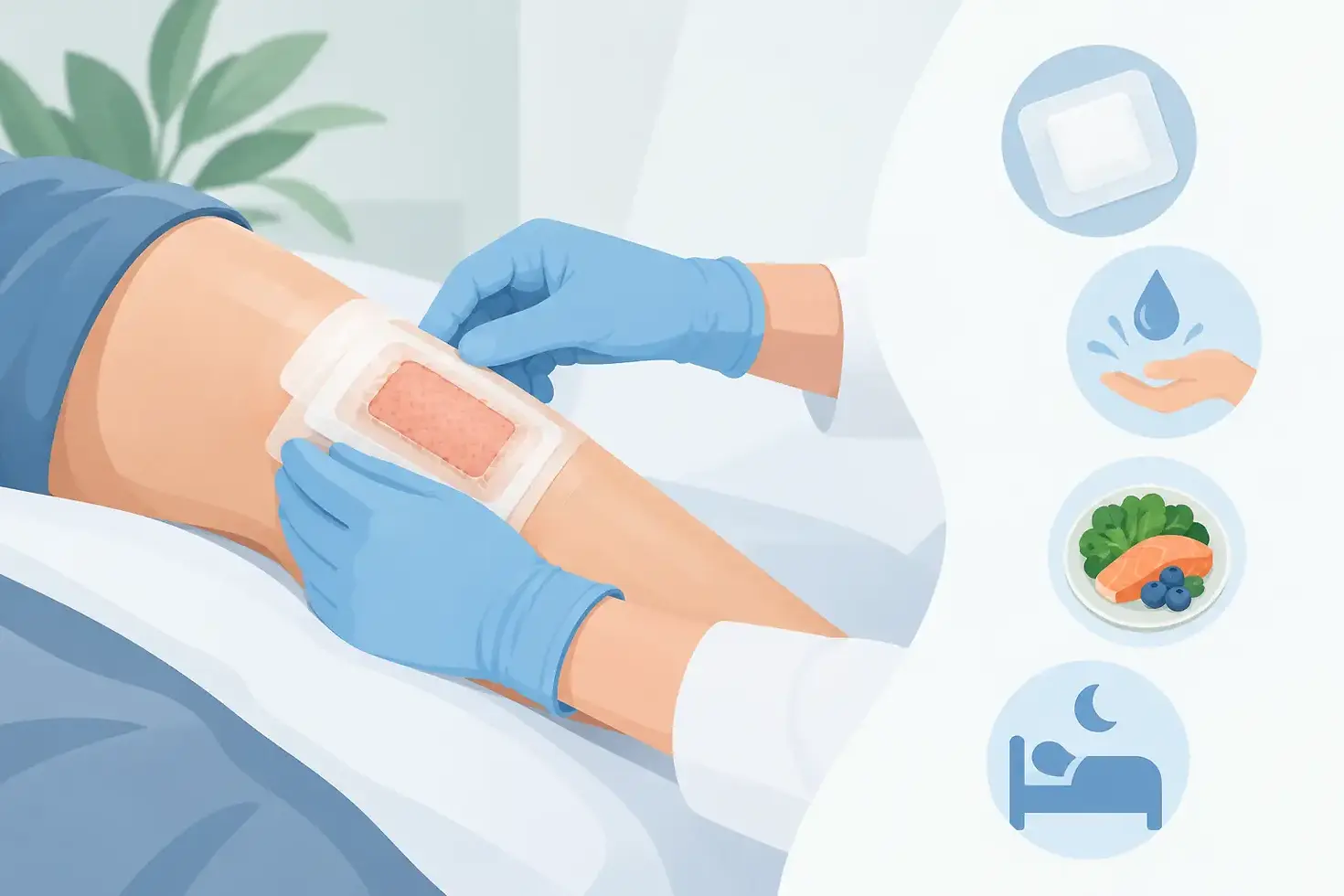
Leave the first dressing exactly as instructed. Many grafts are covered with a secured dressing designed to apply gentle, even pressure. This may be a bolster dressing, a foam dressing, a negative-pressure dressing, or a combination selected for the site and complexity of reconstruction. Do not lift, trim, wet or replace it yourself unless your surgical team has specifically shown you how and advised you to do so.
Avoid pulling, stretching or rubbing the area. A graft over a joint, hand, face, scalp or lower leg may have particularly precise positioning requirements. Your team may ask you to limit a movement, elevate a limb, use a splint, or remain relatively mobile depending on the operation. The correct balance is individual: unnecessary activity may shear the graft, but complete immobility can carry other risks.
Keep the dressing dry unless you have been told otherwise. A brief wash away from the dressing may be permitted, but soaking in a bath, swimming pool, hot tub or sea is usually inappropriate until the wounds are fully healed and your clinician confirms it is safe.
Skin graft aftercare steps for the recipient site
The recipient site is where the graft has been placed. At the first review, usually arranged by the surgical team, the dressing is removed or changed and the graft is assessed for colour, attachment and early healing. A healthy graft may appear pale, pink, dusky or bruised in the first days. Colour alone is not a reliable way to judge success, which is why consultant-led review matters.
After the initial check, you may be advised to clean the site gently with water or saline and apply a specified non-adherent dressing. Use only the products recommended for you. Antiseptics, perfumed creams, topical antibiotics and home remedies can irritate fragile healing skin or interfere with the planned dressing regime.
If dressings are required at home, wash your hands carefully before and after touching the wound area. Apply the dressing without dragging it across the graft. Keep clothing loose where possible, particularly if the graft is on the trunk, groin, limb or shoulder. Friction from footwear, waistbands or compression garments can be problematic unless those garments have been specifically prescribed.
Elevation is commonly helpful after grafting to the leg, ankle, foot, hand or forearm. Raising the limb above heart level when resting can reduce swelling and fluid pressure. However, compression should only be used as directed. It can be valuable in selected cases, especially once healing is established, but poorly timed or incorrectly fitted compression may damage a vulnerable graft.
Pain should be treated using the medication plan provided after surgery. Increasing pain rather than gradual improvement deserves attention, particularly if it occurs with heat, redness, unpleasant odour or discharge. Do not take aspirin, anti-inflammatory medication or supplements that affect bleeding unless your surgeon has confirmed they are appropriate for you.
Do not overlook the donor site
The donor site is the area from which skin was taken. For a split-thickness graft, it can resemble a superficial graze and may be more painful than the graft itself. A full-thickness donor site is usually closed with stitches and requires care similar to a surgical incision.
Donor-site dressings are often intentionally left in place until they loosen or are removed at a planned appointment. If the dressing becomes wet, slips significantly, leaks heavily or develops an offensive smell, contact the treating team rather than attempting to remove it. Some oozing or staining can be expected, particularly in the first 24 to 48 hours, but active bleeding that does not stop with gentle, sustained pressure requires urgent advice.
Once the donor site has healed, dryness, itching and colour change are common. A simple fragrance-free moisturiser may be recommended. The area remains susceptible to friction and sun damage for months, so protect it from direct sunlight and use high-factor broad-spectrum sun protection when exposed.
Activity, nutrition and lifestyle choices that support healing
Healing requires more than a well-applied dressing. Protein, adequate fluids and a balanced diet support tissue repair. If you have diabetes, careful blood glucose management is particularly important, as raised glucose can impair wound healing and increase infection risk. Patients with circulation problems, immune suppression, nutritional deficiency or a history of difficult wound healing may need closer review.
Smoking and nicotine exposure are major concerns after graft surgery. Cigarettes, vaping products, nicotine pouches and replacement products can constrict blood vessels and reduce oxygen delivery to healing tissue. Stopping nicotine use before and after surgery gives the graft the best possible conditions to establish its blood supply. Be candid with your surgeon about nicotine use so that your care plan can be tailored safely.
Alcohol can interact with prescribed pain medicines, worsen dehydration and make it easier to miss early warning signs. Avoid it while taking sedating medication and follow your surgical team's specific advice. Driving should wait until you can safely perform an emergency stop, are no longer taking sedating analgesia and can move without risking the graft.
Know when to contact your surgical team
A small amount of discomfort, swelling, bruising or light staining of a dressing can be expected. The key is the direction of change. Seek prompt clinical advice if you develop increasing redness around the wound, worsening pain, spreading swelling, pus-like discharge, a fever or chills, or a strong unpleasant odour.
You should also contact the team if the graft becomes increasingly dark, grey, cold-looking, loose, markedly swollen, or if there is bleeding that soaks through the dressing. A collection of blood or fluid beneath a graft can sometimes be treated effectively when recognised early. Do not wait for a routine appointment if you are concerned.
Urgent assessment is needed for heavy bleeding, severe shortness of breath, chest pain, fainting, or symptoms of a serious allergic reaction. If you are unable to reach the surgical team, use the appropriate urgent medical service.
After the wound has closed: scar maturation and protection
A graft may be healed on the surface within weeks, yet scar maturation continues for many months. The texture, colour and sensitivity can change substantially during this period. Some grafts remain lighter or darker than surrounding skin, and some may be less supple, particularly across mobile areas. This is not necessarily a sign of a poor result, but it should be monitored in the context of function and appearance.
Once the skin is fully closed and your clinician agrees, scar care may include regular moisturising and massage. Silicone gel or sheeting can be useful for selected scars, while pressure therapy, splintage, physiotherapy, laser treatment or surgical scar revision may be appropriate in more complex reconstructive cases. These decisions should be individualised, especially after burns, trauma, cancer reconstruction or grafting across joints.
Protect both graft and donor site from ultraviolet exposure. Newly healed skin can pigment unpredictably and may burn easily. Covering the area and applying high-factor broad-spectrum sun protection are prudent for at least the first year, and often longer in areas exposed to daily sun.
A successful graft is judged not only by whether it survives, but by how comfortably and effectively it supports your recovery. Attend every planned review, raise concerns early, and allow your consultant team to adjust care as the wound evolves. Thoughtful aftercare gives specialised surgical work the best opportunity to heal well.


Comments